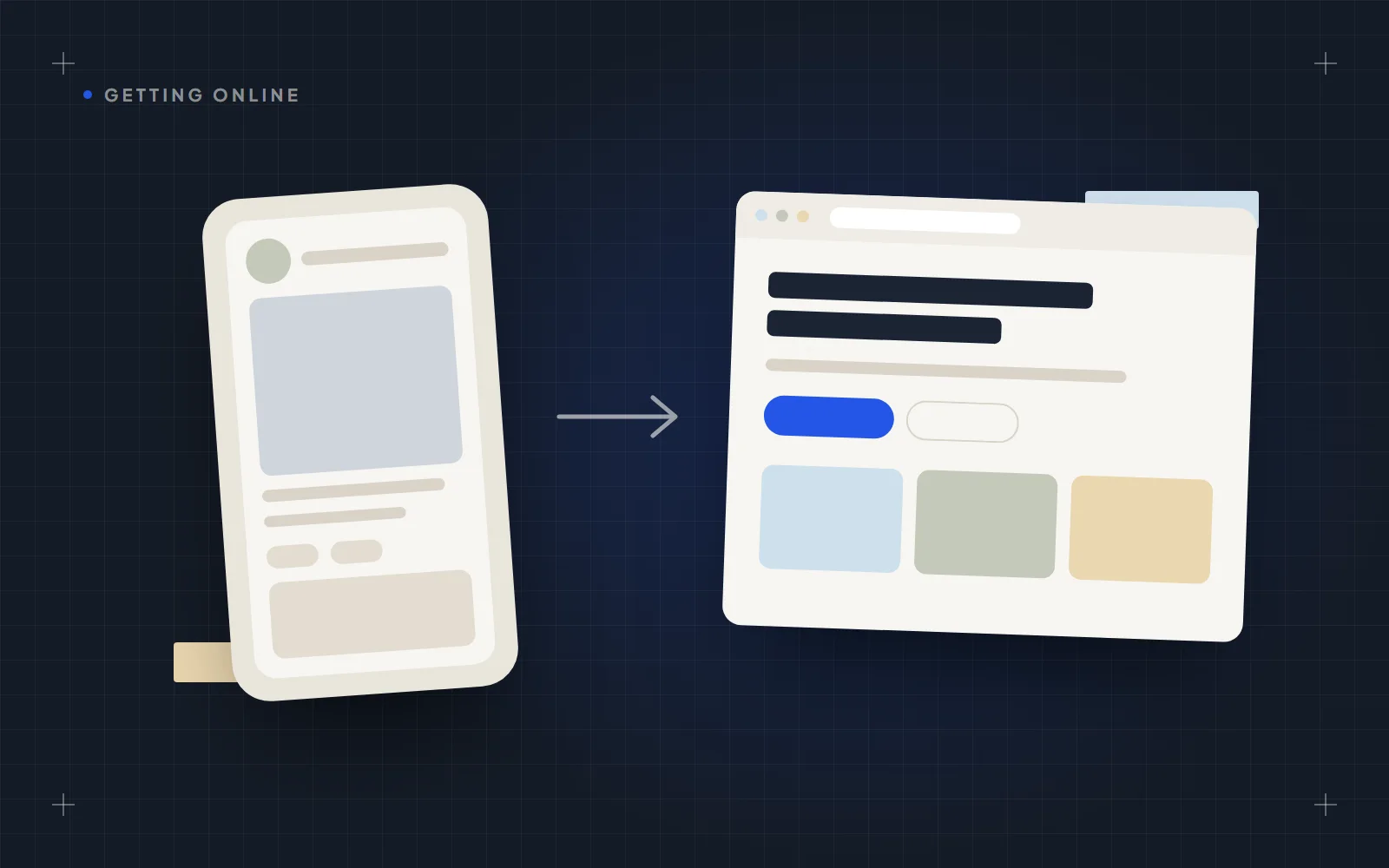
Plenty of good businesses run on a Facebook page, an Instagram account and a stack of five-star Google reviews. The phone rings, the diary is full, and a website feels like something you'll get round to.
Sometimes that's genuinely fine. If you're booked out months ahead on word of mouth alone, a website won't change much this year. For most businesses, though, the social page is doing a job it wasn't built for, and it's costing enquiries you never hear about.
What happens when someone finds you on Google
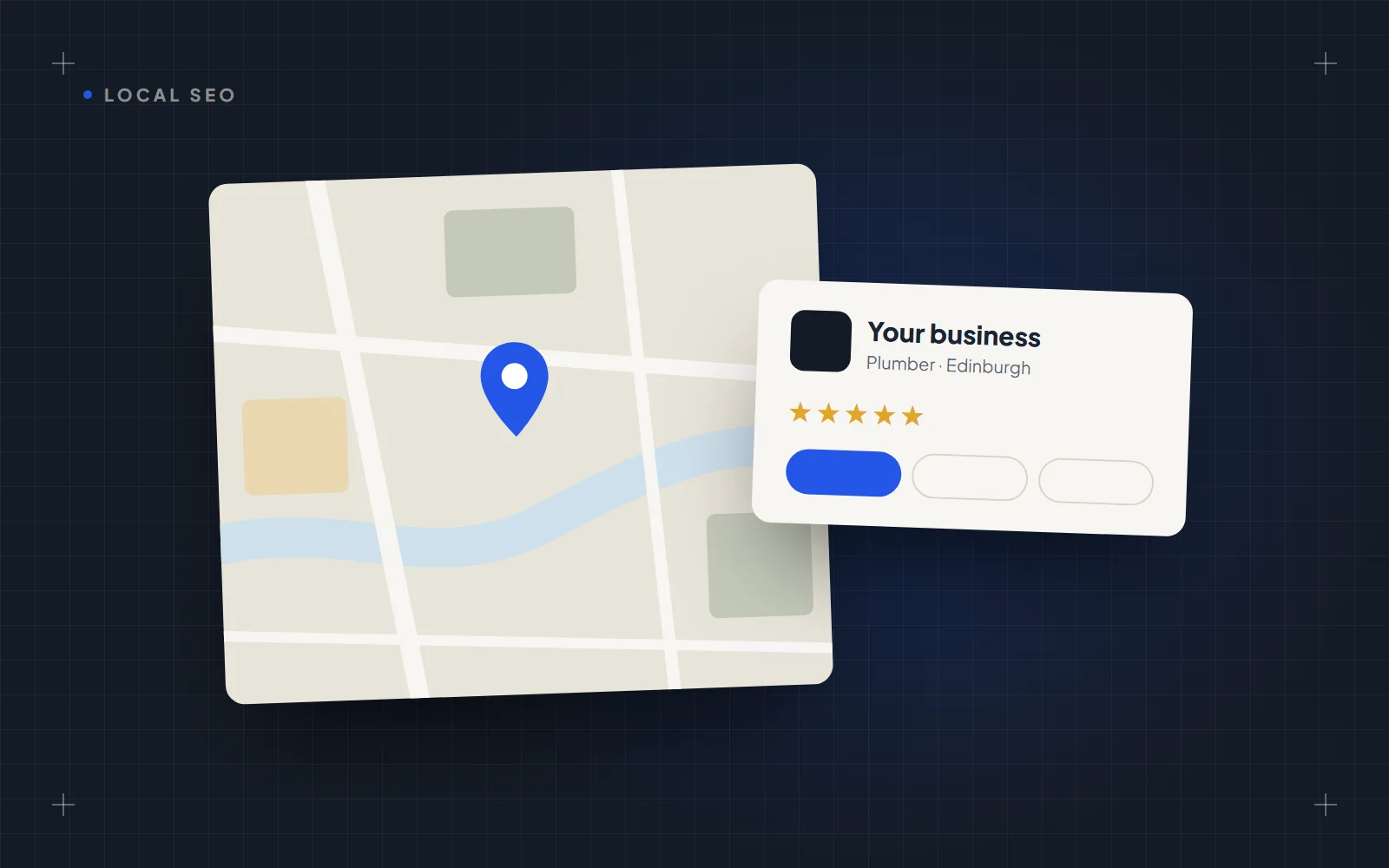
Picture a homeowner in Edinburgh searching for a plumber. They see your Google Business Profile with 60 good reviews, and a competitor with 25 reviews and a website. They tap through to both.
Your link opens a Facebook page. The most recent post is a van photo from March. Your prices, the areas you cover and the jobs you do are somewhere in the comments, or nowhere at all. The competitor's site has a page for boiler repairs, the postcodes they cover, a rough price guide and a "request a quote" button.
Your reviews got you the click. The competitor's website got the enquiry.
Five things a website does that social pages don't
1. It answers the questions people ask before they call
Price range, areas covered, how soon you can start, what's included, whether you do the specific job they need. Social pages are a feed of posts. A website puts the answers in a fixed place where people can find them in ten seconds.
2. It gives your Google profile somewhere to send people
Google Business Profiles have a website field for a reason. A site that matches what your profile says (same name, same phone number, same services and areas) gives Google more confidence about who you are and where you work, which helps you show up in local searches.
3. You own it
Facebook and Instagram can change their rules, limit how many of your followers see a post, or lock your account, and there's very little you can do about it. Your website and your domain are yours. Nobody else decides who sees them.
4. It can show up for searches your profile can't
A Google Business Profile helps you appear in the map results near your base. A website with a page for each service can show up for searches like "loft conversion Portobello" or "sports massage Leith", including from people who have never heard of you.
5. It makes you look established
A business email on your own domain, a clean site with your real work on it, and a contact form that gets answered all tell people you're not going to disappear halfway through a job. That matters most for bigger jobs, where people are choosing who to trust with thousands of pounds.
What you don't need
You don't need a 30-page site, a blog you'll never update, or a monthly marketing package. For most small businesses a strong first website is:
- a homepage that says what you do, where, and how to get in touch
- one page per main service
- a page of your work (photos, before and afters, or case studies)
- your reviews, pulled from Google so they're real and up to date
- a contact page with a form, your phone number and the areas you cover
That's often five to eight pages. Done well, it will keep bringing in enquiries for years with only light updates.
When a website really can wait
Be honest with yourself about these:
- You're fully booked for the next six months and don't want more work.
- Every job comes from a referral, and those clients call you directly.
- You're about to rebrand or change what you offer, so anything built now would be out of date in weeks.
If one of those is you, hold off. Keep your Google Business Profile complete and keep collecting reviews, because they'll make the website work harder when you do build it.
The cost question
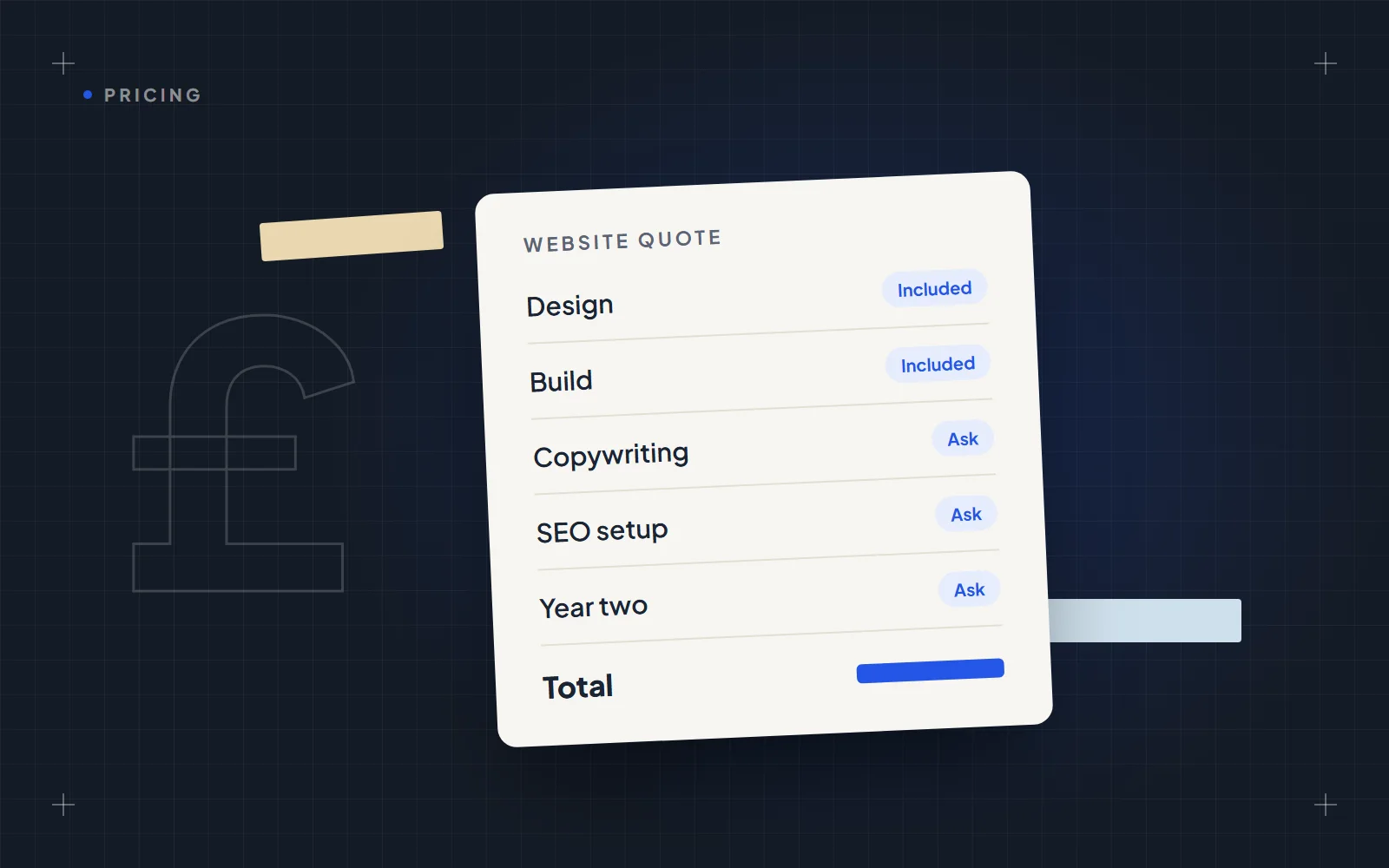
A website doesn't need to be a big investment to work. We've written a separate guide on what a small business website costs in the UK, including the yearly running costs.
At Sitewright, a new site is a fixed £1,800, live in 14 days, with the copywriting done for you. If you've got the reviews but no website yet, tell us about your business and we'll show you what the site could look like.