If you run a small business and need a website, the first fork in the road is simple: build it yourself on Wix or Squarespace, or pay someone to build a custom site. Both routes produce a working website. They differ in what you pay, how much of your own time goes in, and how much control you have once the site is live.
We build custom websites, so we have an obvious interest here. We'll still tell you when a DIY builder is the better call, because for some businesses it is.
What Wix and Squarespace actually are
Wix and Squarespace are website builders. You pick a template, drag sections around, type your text, upload photos and publish. Hosting, security certificates and updates are handled for you, and you pay a monthly plan rather than a large upfront fee.
The two are close cousins with different personalities.
Wix
Wix gives you more freedom to move things around. You can drop an element almost anywhere on the page, and there's a large app market for bookings, forms, shops and so on. That freedom cuts both ways: it's easy to end up with a page that looks fine on a laptop and messy on a phone, because every element you nudged has to be checked on mobile too.
Squarespace
Squarespace is more structured. The templates are polished, and the editor keeps you inside the lines, so it's harder to make something that looks amateur. The trade-off is that when you want a layout the template wasn't designed for, there often isn't a way to get it without code.
What a custom website means
A custom website is designed and built for your business specifically. Someone works out what pages you need, writes or edits the words, designs the layouts and builds the site, usually on a modern hosting platform. You pay once for the build, then a small amount each year for hosting and your domain, plus any ongoing help you choose to buy.
"Custom" covers a wide range. A freelancer adjusting a theme and a studio designing every page from scratch both call it custom, so always ask what you're actually getting.
Side by side
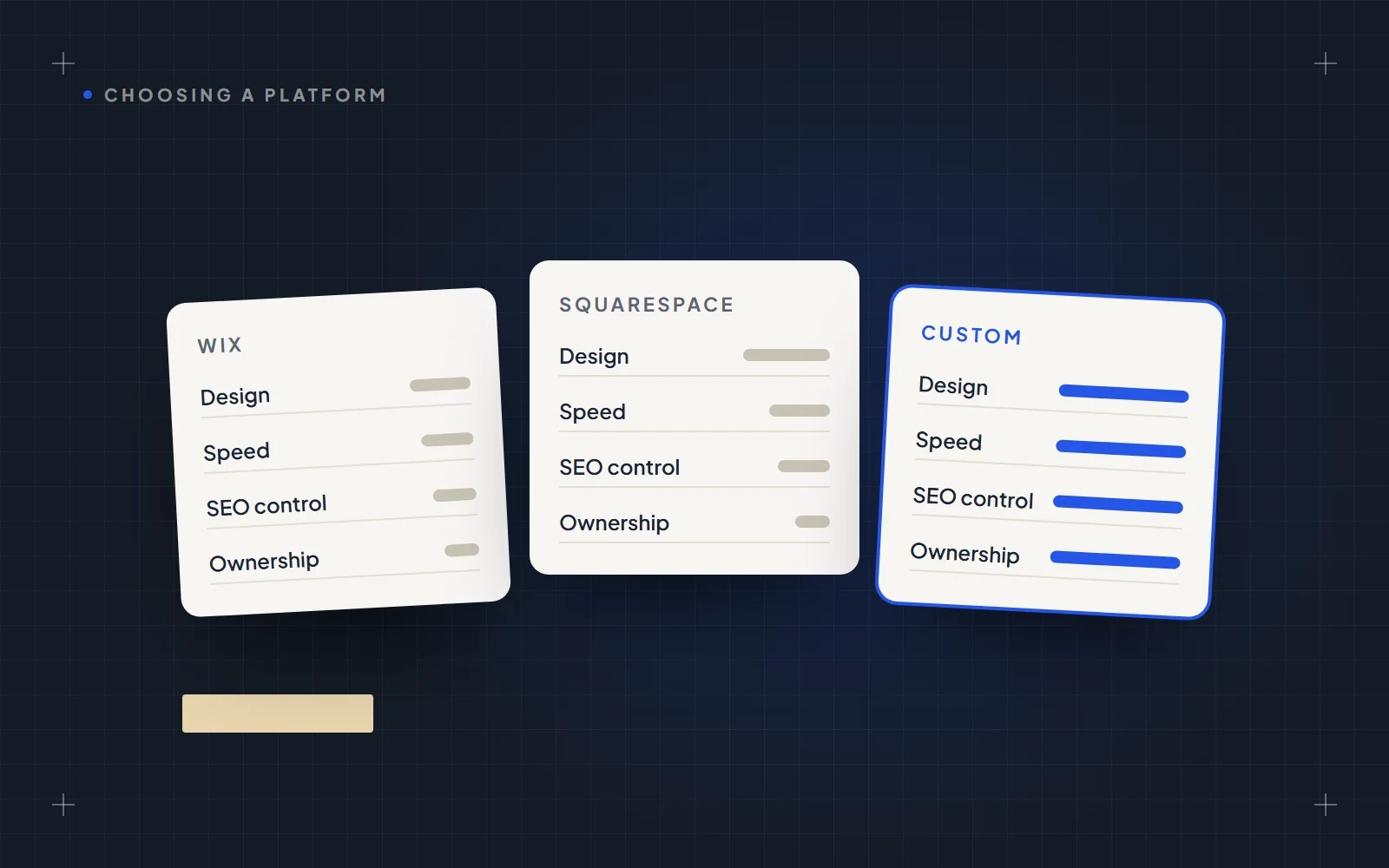
| Wix | Squarespace | Custom website | |
|---|---|---|---|
| Upfront cost | None | None | One-off build fee |
| Monthly cost | Plan fee, higher tiers for shops and extras | Plan fee, higher tiers for shops and extras | Hosting (often low), plus optional care plan |
| Your time | High: you design, write and build | High, a little less than Wix | Low: a few calls and feedback rounds |
| Design freedom | Lots, within the editor's limits | Limited to what templates allow | Anything you can describe |
| Speed on phones | Varies, often slowed by apps and effects | Generally decent | Depends on the builder; can be very fast |
| SEO control | Good basics, limited fine control | Good basics, limited fine control | Full control |
| Ownership | You rent the site; the design stays on Wix | You rent the site; the design stays on Squarespace | You own the site and the code |
| Moving away later | Rebuild from scratch | Rebuild from scratch | Move hosts or designers freely |
| When it breaks | You, or Wix support | You, or Squarespace support | Whoever built it, or anyone you hire |
Where DIY builders do well
DIY builders are a sensible choice in a few situations, and it's worth being straight about them.
You're very early. If you're still testing whether the business works, a few weeks on a template site costs less than a custom build, and you can change your offer as often as you like.
Your budget is very tight. No upfront cost matters when cash is short. A simple, honest one-page site on Squarespace beats having no site at all.
You enjoy doing it. Some owners like tinkering with their own site on a Sunday evening. If that's you, and the time doesn't come out of paid work, a builder makes sense.
Your needs are simple and stable. A page with what you do, where you are, your hours and a phone number doesn't need much more than a template.
Where DIY builders fall down
The hidden cost is your time
The plan fee is the visible cost. The real one is the evenings spent choosing templates, cropping photos, writing every page and fixing the mobile layout. If you bill £40 an hour and the site takes you three weekends, the "free" website has cost you more than many professional builds.
Writing is the hard part
Templates come with placeholder text, and replacing it with words that make a stranger pick up the phone is a skill. Most DIY sites end up with a homepage that says "Welcome to our website" and a services page that lists services without saying who they're for or why you're the right choice.
SEO tops out early
Both builders handle the basics: page titles, descriptions, sitemaps. Where they struggle is the next level: page speed on mobile, clean structured data that tells Google your business type and location, and full control over how each page is built. For a business that relies on local search, those details decide whether you show up for "electrician near me" or sit on page three.
You don't own it
On Wix or Squarespace you own your words and photos, but the site itself only exists inside their platform. If prices rise or the platform changes direction, you can't pack the site up and move it. You start again somewhere else.
Where custom websites fall down
To be fair to the other side, custom sites have their own risks.
- Upfront cost. You pay for the build before it brings in any work.
- Quality varies. A poor custom site is worse than a good template. Ask to see live sites the designer has built and check them on your phone.
- Dependence on the builder. If the site is built in a way only one person understands, edits get slow and expensive. Ask who can update it, and whether you get full access.
- Locked-in contracts. Some agencies bundle the build into a long monthly contract. Check what happens if you leave.
Who should choose which
Choose Wix if you want to build it yourself, like moving things around freely, and are happy to check every page on your phone.
Choose Squarespace if you want to build it yourself but prefer a tidy, structured editor that stops the design going wrong.
Choose a custom website if your site needs to bring in enquiries from search, your time is worth more spent on paid work, you want the words written properly, or you want to own the site outright and be free to move it later.
A common path is to start on a builder and move to a custom site once the business is steady and you can see which pages people actually use. That's a perfectly good plan, as long as you know the move will mean a rebuild.
What a custom website looks like with us
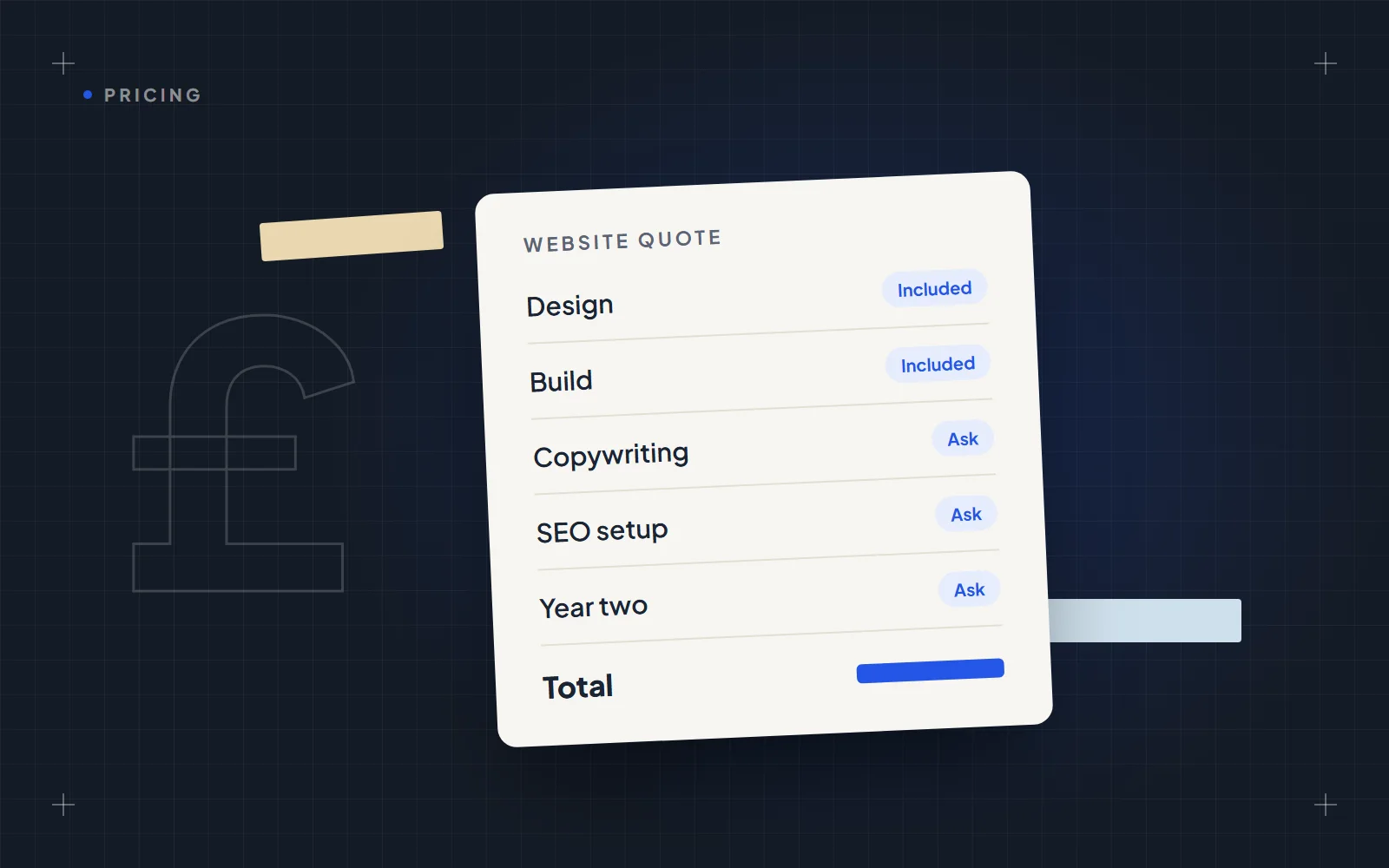
Our websites are a fixed £1,800 and go live in 14 days. That covers the design, the build, the copywriting and the SEO setup, so you don't spend weekends writing pages. The domain is registered in your name, the site is yours, and there's no long contract tying you in.
If you're weighing up the full cost of each route, our guide to what a small business website costs in the UK breaks down the running costs too.
When you're ready to compare properly, get a fixed quote and we'll come back within one business day.